
INDUSTRY APPLICATION
Complete guide to selecting magnetic flap level gauge manufacturers
In the industrial production process, liquid level measurement serves as the "eyes" of equipment, and magnetic flap level gauges, due to their intuitive and reliable features, have become the choice of numerous industries. Faced with a plethora of magnetic flap level gauge manufacturers in the market, how can one make a wise choice? This not only pertains to measurement accuracy but also directly impacts production safety and operational costs.

The core of the magnetic flap liquid level gauge lies in its "inner strength". Firstly, attention should be paid to the key materials - how corrosion-resistant the 304/316L stainless steel of the liquid-contacting part is, and how well the density of the magnetic float matches the medium. These directly determine the lifespan and stability of the instrument under complex working conditions. The magnetic coupling strength, visible distance, and UV resistance of the flap display component are the guarantees for clear readings. Whether the manufacturer can provide comprehensive material certification and third-party inspection reports is the most direct endorsement of its product quality.
"Technical adaptation determines the outcome. 'The most suitable is the best.' It must be deeply customized according to actual working conditions: medium characteristics (corrosivity, viscosity, density), process pressure (vacuum to high pressure), temperature range (cryogenic to high temperature), installation method (side mounting/top mounting/with protective conduit), as well as special requirements such as explosion-proof and corrosion-resistant. Excellent manufacturer engineers will communicate these details carefully, rather than simply promoting standard products. Assessing whether the manufacturer can provide clear selection guidelines and a professional working condition inquiry checklist is a touchstone for judging its technical strength.
When choosing a manufacturer, the essence is to select a long-term partner based on both its "hard power" and "soft power". When assessing its "hard power", we should consider whether the production equipment is advanced, whether the process workshop is standardized, and whether the quality management system (such as ISO9001) is fully certified. The "soft power" is equally crucial: whether the technical team can respond quickly to model selection inquiries and provide clear installation guidance and debugging support. Most importantly, we cannot overlook the after-sales commitment - warranty period, fault response time, and spare parts supply capability, which constitute a safety net for the long-term stable operation of the equipment.
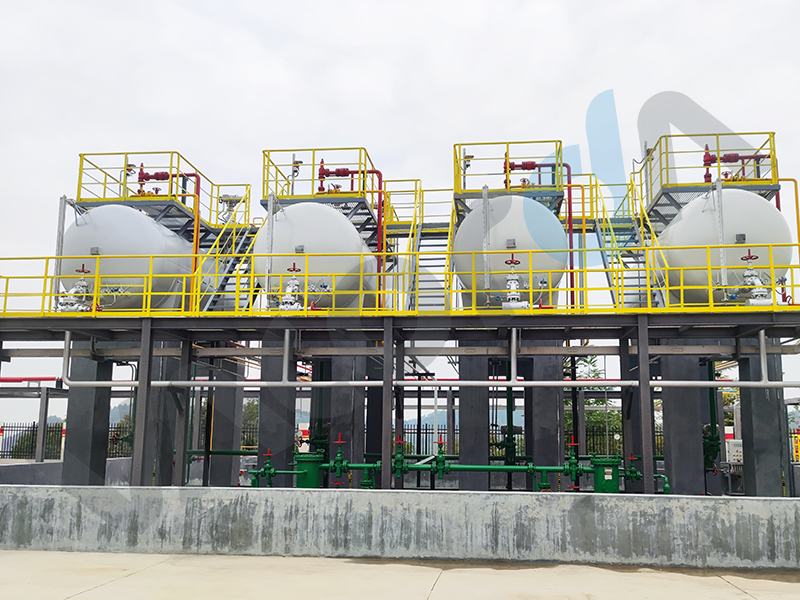
Comprehensive evaluation beyond price: Price is a sensitive factor, but it is by no means the only criterion. Be wary of the temptation of prices far below the average market price, as this often indicates material shrinkage or process defects. True cost accounting should be based on the entire life cycle: a higher purchase price that results in a longer maintenance-free period and a lower risk of failure is undoubtedly a more economical choice. Understanding the reputation of manufacturers through industry circles, conducting on-site inspections, or referring to typical application cases can all provide valuable basis for decision-making.
Choosing a magnetic flap level gauge manufacturer involves a rational and far-sighted consideration. It requires us to penetrate marketing rhetoric and focus on the essence of the product, technical compatibility, and service commitments. In this precise industrial world, a prudent choice adds a reliable guarantee for the smooth operation of the production system. Only by taking a long-term perspective can we build a safe, efficient, and durable production defense line based on precise measurement.
Recommended Instruments
Address:No. 41 Chengxi Road, Yantan Industrial Park, Zigong, Sichuan Province, China
E-mail:sales@vacorda.com
Copyright © 2024 Sichuan VACORDA Instruments Manufacturing Co., Ltd.


