
NEWS CENTER
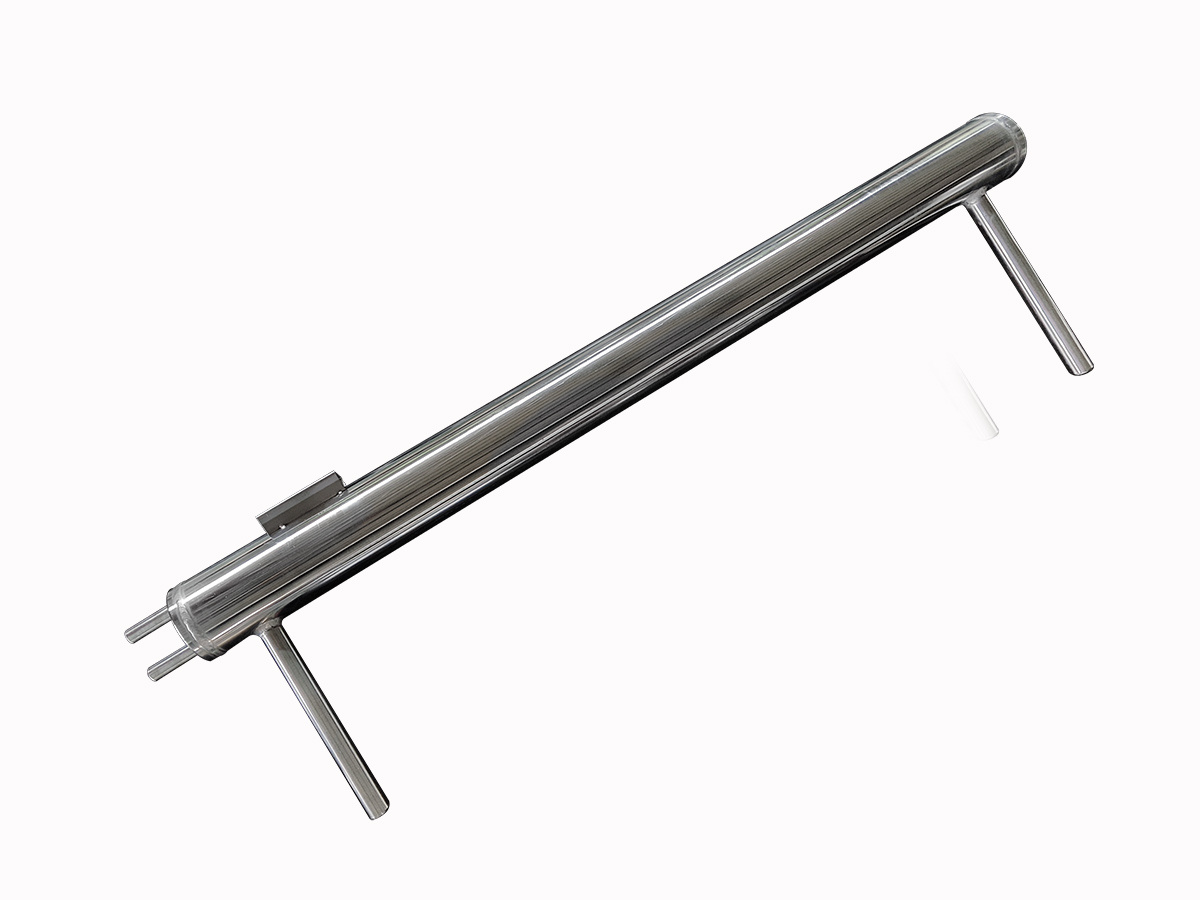
Internal Structure and Working Principle of Double-Chamber Balancing Vessel
Time:
2025-05-15
I. Internal Structure
Dual-Chamber Design
Outer Chamber: Connected to the steam space of the boiler drum, filled with condensed water to reduce heat loss through insulation17.
Inner Chamber: Linked to the water side of the drum via a pressure guide tube, operating on the communicating vessel principle; its water level synchronizes with the drum’s water level18.
Core Components
Condensation Chamber: Receives saturated steam from the drum, condenses it into water, and directs it into the reference cup5.
Reference Cup: Collects condensed water and transmits the reference pressure to the positive side of the differential pressure transmitter. The cup has a fixed overflow height, with excess water entering the overflow chamber57.
Overflow Chamber: Channels overflow water to the boiler downcomer for discharge while maintaining temperature equilibrium with the drum57.
Communicator: An inverted T-shaped structure connecting the drum’s water side to the negative side of the differential pressure transmitter, dynamically transmitting water level pressure58.
Auxiliary Structures
Includes positive/negative pressure tubes, funnels, and water cups to ensure condensation cycling and thermal balance78.
II. Working Principle
Pressure Balancing Mechanism
The outer and inner chambers maintain identical water temperatures to minimize measurement errors caused by thermal gradients17.
Saturated steam releases heat in the condensation chamber, forming water to keep the density in pressure tubes close to that inside the drum, stabilizing differential pressure signals57.
Differential Pressure Signal Generation
Reference pressure from the reference cup is transmitted to the transmitter’s positive side, while the communicator relays dynamic drum water level pressure to the negative side58.
The differential pressure correlates proportionally to water level changes, converted to actual levels via the formula
P=ρgh
Migration Modes
Negative Migration: The transmitter’s high-pressure (H) side connects to the inner chamber, and the low-pressure (L) side to the outer chamber1.
Positive Migration: The H side links to the outer chamber, and the L side to the inner chamber1.
Dynamic Compensation
Insulation and overflow designs ensure the water density in the positive pressure tube remains consistent with drum conditions, stabilizing differential pressure output despite pressure fluctuations78.
Note
The double-chamber balancing vessel optimizes temperature compensation and dynamic water level measurement, addressing challenges like pressure variations and thermal losses in industrial environments15.
Prev: Application of Vacorda Magnetic Level Gauges in Thermal Power Plants
Next: Working Principle and Application of Magnetostrictive Sensors
Hot news
Vacorda Instruments Showcases at the 2026 Chengdu Petrochemical Technology and Equipment Expo
Vacorda Instruments made a striking appearance at Booth B225 in Hall 7, showcasing its full range of industrial measurement and control products alongside customized solutions for the petrochemical industry.
On August 12, 2026, the 34th China International Measurement Control and Instrumentation Exhibition (MICONEX) grandly opened at the Hefei Binhu International Convention and Exhibition Center. As a national-level high-tech and "Specialized, Refined, Distinctive, and Innovative" (SRDI) enterprise in the field of industrial automation instrumentation, Sichuan Vacorda Instrument Manufacturing Co., Ltd.
On June 29, 2026, Vacorda Instruments marked the milestone of its 30th anniversary. Since its inception in 1996, the company has remained steadfast in the field of process industry automation instrumentation. Upholding quality through craftsmanship and driving growth through innovation, Vacorda has evolved from a startup team into a professional industrial measurement instrument manufacturer—possessing both core technical capabilities and significant market influence—thereby writing a success story of industrial enterprise.
On June 9, 2026, the 2026 China International Petroleum & Chemical Technology and Equipment Exhibition opened at the Shanghai New International Expo Centre. Sichuan Vacorda Instrument Manufacturing Co., Ltd., a national high-tech and specialized enterprise in the field of industrial automation instrumentation,
Vacorda Instruments showcased at the 31st Azerbaijan International Oil and Gas Exhibition
As a high-tech and specialized enterprise deeply rooted in the field of industrial automation instrumentation, Sichuan Vacorda Instrument Manufacturing Co., Ltd. made a strong debut at this international industry event, showcasing its core measurement and control instruments and customized solutions for the entire oil and gas industry. This demonstrated the company's robust "Made in China" capabilities.
As a high-tech and specialized enterprise deeply rooted in the field of industrial automation instrumentation, Sichuan Vacorda Instruments Manufacturing Co., Ltd. made a strong debut at this international industry event,
Address:No. 41 Chengxi Road, Yantan Industrial Park, Zigong, Sichuan Province, China
E-mail:sales@vacorda.com
Copyright © 2024 Sichuan VACORDA Instruments Manufacturing Co., Ltd.


