
NEWS CENTER
Working Principle and Application of Magnetostrictive Sensors
Time:
2025-05-12
1. Introduction
Magnetostrictive sensors are precision devices used to measure position, displacement, or level in a wide range of industrial and automation applications. They offer high accuracy, non-contact measurement, and excellent durability, making them ideal for use in harsh environments such as manufacturing plants, hydraulic systems, and oil tanks.
2. Working Principle
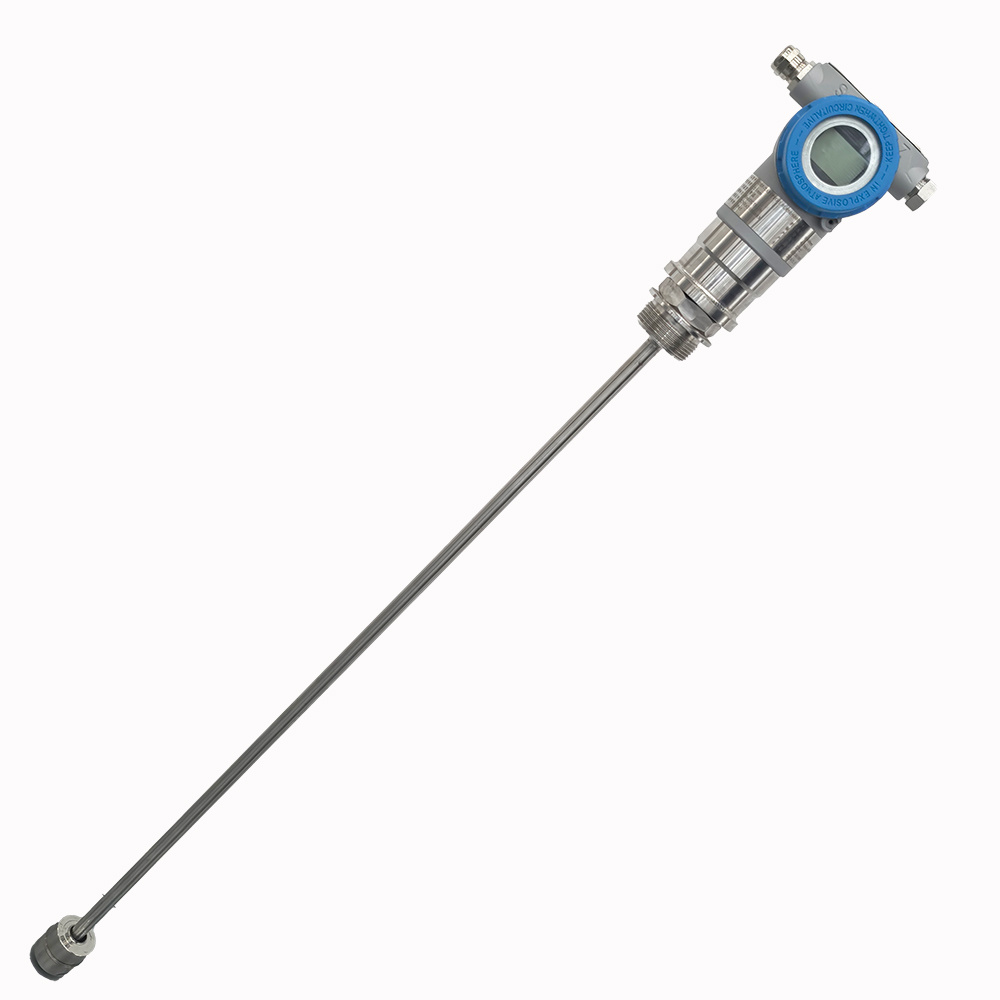
The operation of a magnetostrictive sensor is based on the magnetostrictive effect, a property of certain ferromagnetic materials that causes them to change shape or dimensions when exposed to a magnetic field. Magnetostrictive sensors also rely on the generation and detection of ultrasonic torsional waves in a waveguide.
The sensor typically consists of three main components:
A waveguide (typically a nickel alloy rod)
A movable permanent magnet (position magnet)
Electronics that generate and detect signals
Step-by-Step Process:
Excitation Pulse: An electrical pulse is sent through the waveguide, generating a circular magnetic field around the waveguide due to the current.
Interaction with Position Magnet: The position magnet, which moves along with the object being measured, produces a static longitudinal magnetic field. Where the two magnetic fields interact, a torsional strain (mechanical wave) is generated in the waveguide due to the magnetostrictive effect.
Propagation of Torsional Wave: This mechanical wave travels along the waveguide toward the receiving electronics at a known speed.
Signal Detection and Time Measurement: A pickup coil or piezoelectric sensor detects the returning wave. The system measures the time difference between the excitation pulse and the received torsional wave.
Position Calculation: Since the speed of the torsional wave in the waveguide is constant and known, the time delay is used to accurately calculate the position of the magnet.

3. Advantages
Non-contact measurement (no wear and tear)
High resolution and repeatability
Immunity to vibration, temperature, and contamination
Fast response time
4. Typical Applications
Hydraulic cylinder position sensing
Injection molding machines
Material handling systems
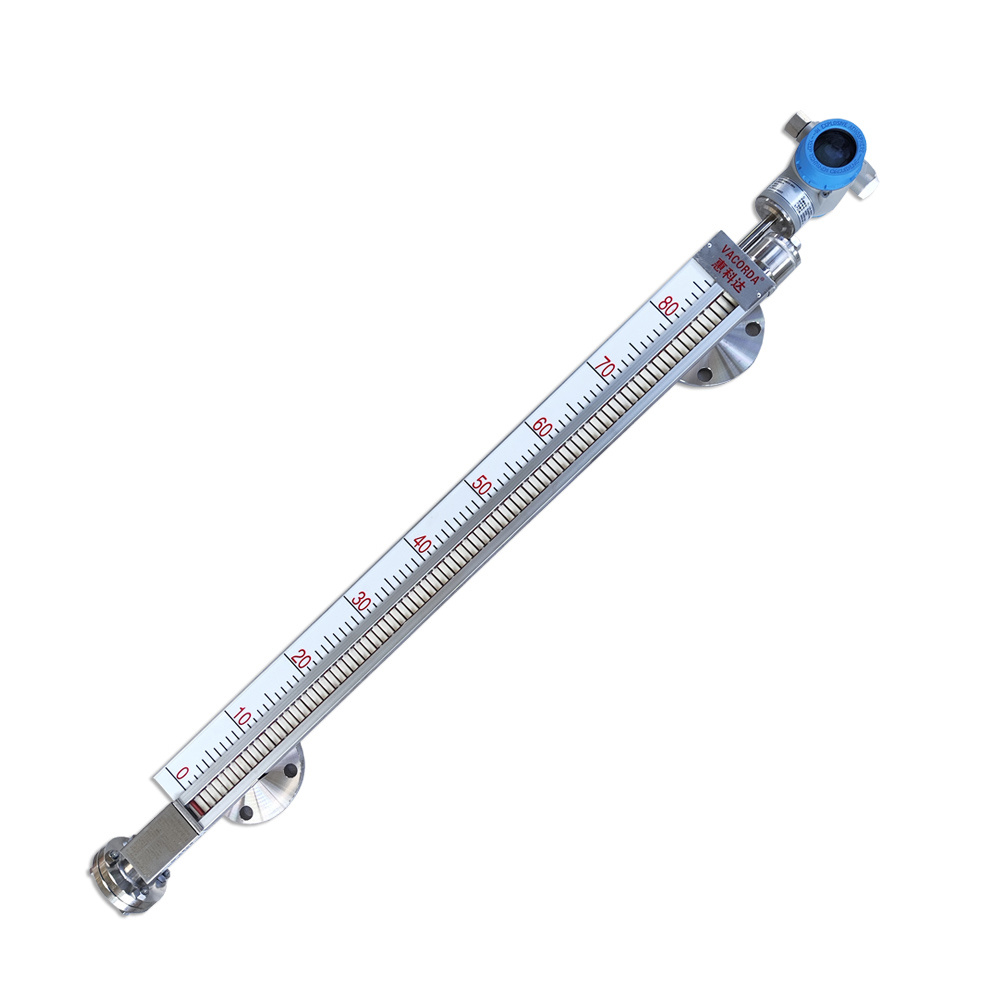
Tank level monitoring
Robotic positioning systems
5. Installation and Usage Tips
Ensure the waveguide is properly aligned and securely fixed.
The position magnet should move linearly and be within the specified sensing distance from the waveguide.
Avoid placing the sensor near strong external magnetic fields to prevent interference.
Use compatible signal conditioners or controllers to process the sensor output, which may be analog (e.g., 0–10V, 4–20mA) or digital (e.g., SSI, PWM, CANopen).
6. Conclusion
Magnetostrictive sensors provide reliable and highly accurate position feedback in a variety of challenging environments. Their non-contact nature extends sensor life and ensures consistent performance, making them an essential component in modern automation and control systems.
Prev: Internal Structure and Working Principle of Double-Chamber Balancing Vessel
Next: Understanding the Working Principle and Applications of Float Level Meters
Hot news
Vacorda Instruments Showcases at the 2026 Chengdu Petrochemical Technology and Equipment Expo
Vacorda Instruments made a striking appearance at Booth B225 in Hall 7, showcasing its full range of industrial measurement and control products alongside customized solutions for the petrochemical industry.
On August 12, 2026, the 34th China International Measurement Control and Instrumentation Exhibition (MICONEX) grandly opened at the Hefei Binhu International Convention and Exhibition Center. As a national-level high-tech and "Specialized, Refined, Distinctive, and Innovative" (SRDI) enterprise in the field of industrial automation instrumentation, Sichuan Vacorda Instrument Manufacturing Co., Ltd.
On June 29, 2026, Vacorda Instruments marked the milestone of its 30th anniversary. Since its inception in 1996, the company has remained steadfast in the field of process industry automation instrumentation. Upholding quality through craftsmanship and driving growth through innovation, Vacorda has evolved from a startup team into a professional industrial measurement instrument manufacturer—possessing both core technical capabilities and significant market influence—thereby writing a success story of industrial enterprise.
On June 9, 2026, the 2026 China International Petroleum & Chemical Technology and Equipment Exhibition opened at the Shanghai New International Expo Centre. Sichuan Vacorda Instrument Manufacturing Co., Ltd., a national high-tech and specialized enterprise in the field of industrial automation instrumentation,
Vacorda Instruments showcased at the 31st Azerbaijan International Oil and Gas Exhibition
As a high-tech and specialized enterprise deeply rooted in the field of industrial automation instrumentation, Sichuan Vacorda Instrument Manufacturing Co., Ltd. made a strong debut at this international industry event, showcasing its core measurement and control instruments and customized solutions for the entire oil and gas industry. This demonstrated the company's robust "Made in China" capabilities.
As a high-tech and specialized enterprise deeply rooted in the field of industrial automation instrumentation, Sichuan Vacorda Instruments Manufacturing Co., Ltd. made a strong debut at this international industry event,
Address:No. 41 Chengxi Road, Yantan Industrial Park, Zigong, Sichuan Province, China
E-mail:sales@vacorda.com
Copyright © 2024 Sichuan VACORDA Instruments Manufacturing Co., Ltd.


