
NEWS CENTER
Understanding the Working Principle and Applications of Float Level Meters
Time:
2025-05-09
Float level meters, also known as float-operated level sensors or float switches, are widely used instruments in industrial and domestic applications for measuring the level of liquids within tanks, vessels, or reservoirs. Their simplicity, reliability, and cost-effectiveness make them a popular choice in various sectors, including water treatment, chemical processing, oil and gas, and food and beverage industries.
Working Principle
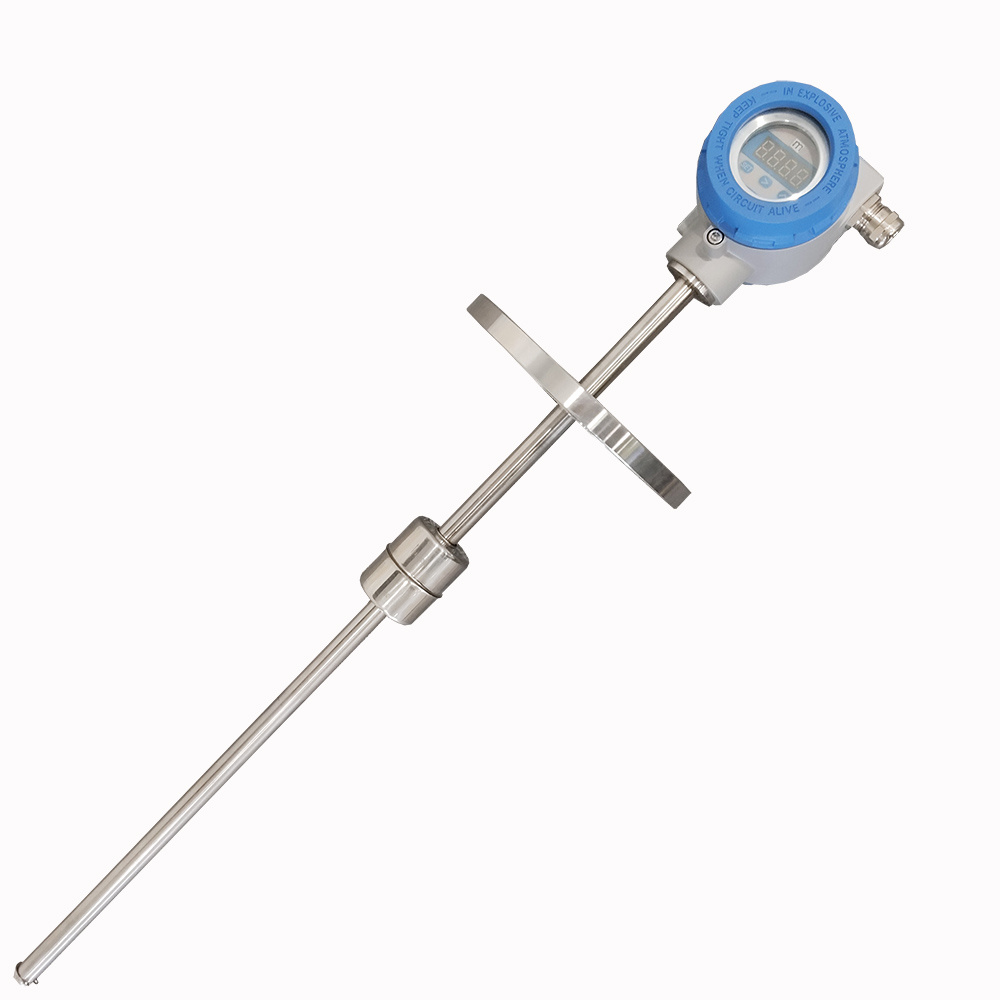
The float level meter operates on a basic but effective principle: buoyancy. A float, which is typically made from materials such as stainless steel, plastic, or other corrosion-resistant substances, is placed inside a tank or vessel. As the liquid level changes, the float moves up or down accordingly.
There are two primary mechanisms through which this movement is converted into a readable signal:
Mechanical Linkage: In this type, the float is mechanically connected to an indicator or a lever system. As the float moves, it directly drives a pointer or activates switches, providing a visual or electrical signal of the liquid level.
Magnetic Coupling and Reed Switches: More advanced versions use a magnetic float that moves along a stem containing reed switches or magnetic sensors. As the float passes by the sensors, it opens or closes the electrical circuit, generating a signal corresponding to the liquid level. This design is common in continuous level measurement applications.
Some systems also integrate transmitters to convert the float movement into an analog or digital signal that can be transmitted to a control system or display panel.
Advantages of Float Level Meters
Simple design and operation
High reliability and durability
Suitable for a wide range of liquids, including corrosive and viscous fluids
Cost-effective compared to other level measurement technologies
No need for power supply in mechanical versions
Common Application Scenarios
Water and Wastewater Treatment: Used to monitor and control water levels in tanks, sumps, and reservoirs to prevent overflow or dry running of pumps.
Chemical Industry: Suitable for measuring levels of corrosive chemicals, especially when constructed with appropriate materials resistant to harsh environments.
Oil and Gas: Used in storage tanks to measure the levels of fuels, lubricants, and other petroleum products.
Food and Beverage Industry: Ensures proper levels of liquids such as milk, juices, or cleaning solutions in processing and storage tanks.
HVAC Systems: Helps in monitoring the level of condensate or coolant in air conditioning and refrigeration systems.
Marine and Shipping: Utilized in bilge systems and fuel tanks to ensure operational safety and compliance with regulations.
Conclusion
Float level meters provide a robust and proven solution for liquid level measurement in a wide array of industrial and commercial applications. Their versatility and adaptability to various liquid types and operating environments make them an essential tool in modern process monitoring and control systems.
Prev: Working Principle and Application of Magnetostrictive Sensors
Next: Ultrasonic Level Meter: Components, Working Principle, Applications, and Future Prospects
Hot news
Vacorda Instruments Showcases at the 2026 Chengdu Petrochemical Technology and Equipment Expo
Vacorda Instruments made a striking appearance at Booth B225 in Hall 7, showcasing its full range of industrial measurement and control products alongside customized solutions for the petrochemical industry.
On August 12, 2026, the 34th China International Measurement Control and Instrumentation Exhibition (MICONEX) grandly opened at the Hefei Binhu International Convention and Exhibition Center. As a national-level high-tech and "Specialized, Refined, Distinctive, and Innovative" (SRDI) enterprise in the field of industrial automation instrumentation, Sichuan Vacorda Instrument Manufacturing Co., Ltd.
On June 29, 2026, Vacorda Instruments marked the milestone of its 30th anniversary. Since its inception in 1996, the company has remained steadfast in the field of process industry automation instrumentation. Upholding quality through craftsmanship and driving growth through innovation, Vacorda has evolved from a startup team into a professional industrial measurement instrument manufacturer—possessing both core technical capabilities and significant market influence—thereby writing a success story of industrial enterprise.
On June 9, 2026, the 2026 China International Petroleum & Chemical Technology and Equipment Exhibition opened at the Shanghai New International Expo Centre. Sichuan Vacorda Instrument Manufacturing Co., Ltd., a national high-tech and specialized enterprise in the field of industrial automation instrumentation,
Vacorda Instruments showcased at the 31st Azerbaijan International Oil and Gas Exhibition
As a high-tech and specialized enterprise deeply rooted in the field of industrial automation instrumentation, Sichuan Vacorda Instrument Manufacturing Co., Ltd. made a strong debut at this international industry event, showcasing its core measurement and control instruments and customized solutions for the entire oil and gas industry. This demonstrated the company's robust "Made in China" capabilities.
As a high-tech and specialized enterprise deeply rooted in the field of industrial automation instrumentation, Sichuan Vacorda Instruments Manufacturing Co., Ltd. made a strong debut at this international industry event,
Address:No. 41 Chengxi Road, Yantan Industrial Park, Zigong, Sichuan Province, China
E-mail:sales@vacorda.com
Copyright © 2024 Sichuan VACORDA Instruments Manufacturing Co., Ltd.


